Water heater noises, leaks, and lukewarm showers: what each symptom usually means
Your water heater doesn't fail silently. It usually tells you first, if you know what to listen for.
September 9, 2026 · 4 min read
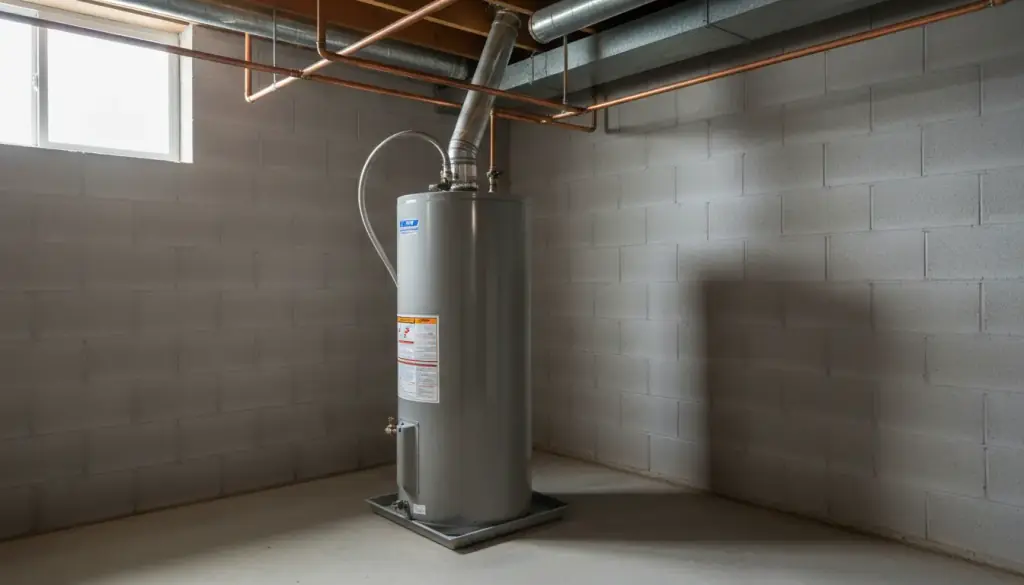
A water heater tends to run quietly in the background for years until suddenly it doesn't, and the confusing part is that different problems show up as different symptoms. Knowing which is which can save you a cold shower, or worse, a flooded utility closet. Here's what we usually find behind the most common complaints, whether it's a traditional tank or a tankless unit.
Popping, rumbling, or knocking sounds
This one is almost always sediment. Minerals in the water settle at the bottom of a tank water heater over time, and as that layer builds up, water trapped underneath it boils and pops through as the burner heats the tank. It's more of a nuisance early on, but a thick sediment layer makes the unit work harder to heat the same amount of water, which shows up on your energy bill, and over years it can shorten the life of the tank. Northwest Indiana's water isn't unusually hard, but every water heater accumulates some sediment eventually, and it's a normal maintenance item, not a sign the unit is failing.
A puddle or dampness at the base
This is the one to take seriously right away. It can mean a few different things: a loose fitting or valve that's simply weeping, condensation if the unit is new or the weather's changed suddenly, or, on an older tank, an actual crack or corrosion in the tank itself. The first two are repairable. The third means the tank is at the end of its life and needs replacement, because once a steel tank has started to fail internally, it doesn't get better. If you see water at the base of your unit, it's worth having someone look at it before it becomes an actual leak that damages flooring or whatever's stored nearby.
Water that's lukewarm instead of hot
On a gas tank unit, this usually points to a pilot light or thermocouple issue, a burner that isn't firing consistently, or a failing heating element on an electric unit. On some tank units, especially larger households, it can also just mean demand has outgrown capacity, several showers and a load of laundry back to back will use up a tank's hot water faster than it recovers. On a tankless unit, lukewarm output is more often a flow rate or sizing issue, or a unit that needs its scale filter serviced. Either way, this is a straightforward diagnostic call rather than a guessing game once someone's actually looking at the unit.
Inconsistent temperature that swings hot and cold
- A failing thermostat or temperature sensor not holding a steady setpoint
- Mineral buildup interfering with a heating element's contact with water
- On tankless units, a flow sensor or igniter that's intermittently misfiring
Reduced hot water output over time
If your household is running out of hot water faster than it used to, before anyone's changed their habits, that's usually one of two things. On a tank unit, sediment buildup at the bottom takes up physical space that used to be usable hot water, so the effective capacity of the tank shrinks even though the tank itself hasn't changed size. On a tankless unit, scale buildup on the heat exchanger reduces how efficiently it can bring water up to temperature at a given flow rate, so it throttles output to compensate. Both are addressed with maintenance rather than replacement, provided they're caught before the unit has been straining for years.
When it's actually time to replace rather than repair
Most of what's above is repairable, and a repair is almost always the cheaper and faster route. But a tank unit with visible corrosion or an actual leak from the tank body itself, rather than a fitting, is at the end of its service life and repair isn't a real option. Age matters too, a tank unit that's been in steady use for well over a decade and is showing more than one of the symptoms above at the same time is a candidate for replacement rather than a third repair visit in a year. We'll always tell you honestly which side of that line your unit is on rather than defaulting to either one.
What's worth doing before any of this happens
Routine maintenance, mainly flushing sediment out of a tank unit on a regular basis, is the single biggest thing that keeps a water heater running efficiently and extends its life. It's a lot cheaper than a premature replacement. If you're hearing noises, seeing dampness, or dealing with temperature that isn't what it used to be, on any make or model, tank or tankless, it's worth having it looked at rather than waiting for it to fail completely, usually at the least convenient time. Take a look at our water heaters page for the full range of what we handle, or give us a call for a free on site estimate.
Area Plumbing & Sewer Co, Inc, (219) 845-1411
Call (219) 845-1411More articles
How to tell a clogged sewer line from a single slow drain
One is a five minute fix. The other needs a camera and, sometimes, a truck in your yard.
Why tree roots find your sewer lateral, and what actually stops them coming back
Snaking a root ball out of your line feels like a fix. It usually isn't one.